Capabilities

10 capabilities in 4 stages

Preparation → field perimeter → situational control → evidence.

01 · Preparation

Preparation

What happens before the event.

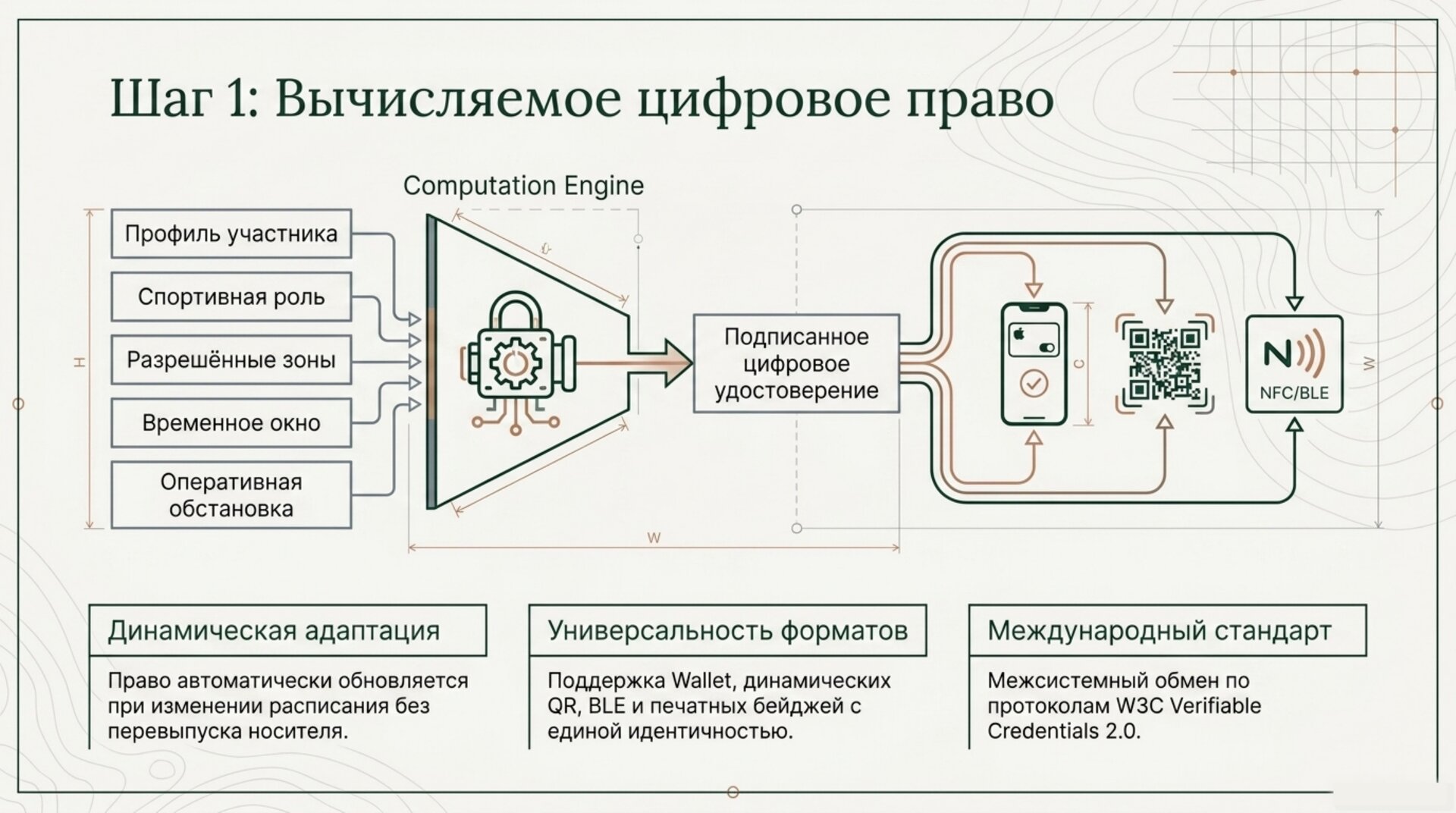
03 · Digital Wallet & Open Credentials

One digital pass in a smartphone with support for open credential formats.

The pass lives in the app and in a wallet. Formats are compatible with open barcode and NFC standards. When rights change, the pass updates without reissuing plastic.
04 · Accreditation Studio

One workspace for intake, role categorisation, approvals and pass issuance.

Configurable forms, roles, attributes and zone rules. Intake from external registration systems, manual and automated approval flows, bulk operations.

05 · Federated Accreditation

Accreditation across several organisers and venues in one loop with clear responsibility boundaries.

The federation, organising committee, venue and contractors share a workspace. Each operator sees its own people, roles and zones while access policy stays coherent end-to-end.

Step 1: computable digital right
02 · Field perimeter

Field perimeter

Mobile posts and field scenarios.

01 · Field Edge Mesh

A local mesh of mobile posts operates without external internet and self-synchronises when connectivity returns.

Field devices exchange access rights, zone states and the event log directly. Each device holds a signed snapshot of current rights and a queue of verifications. When the channel returns, records are merged into one journal.

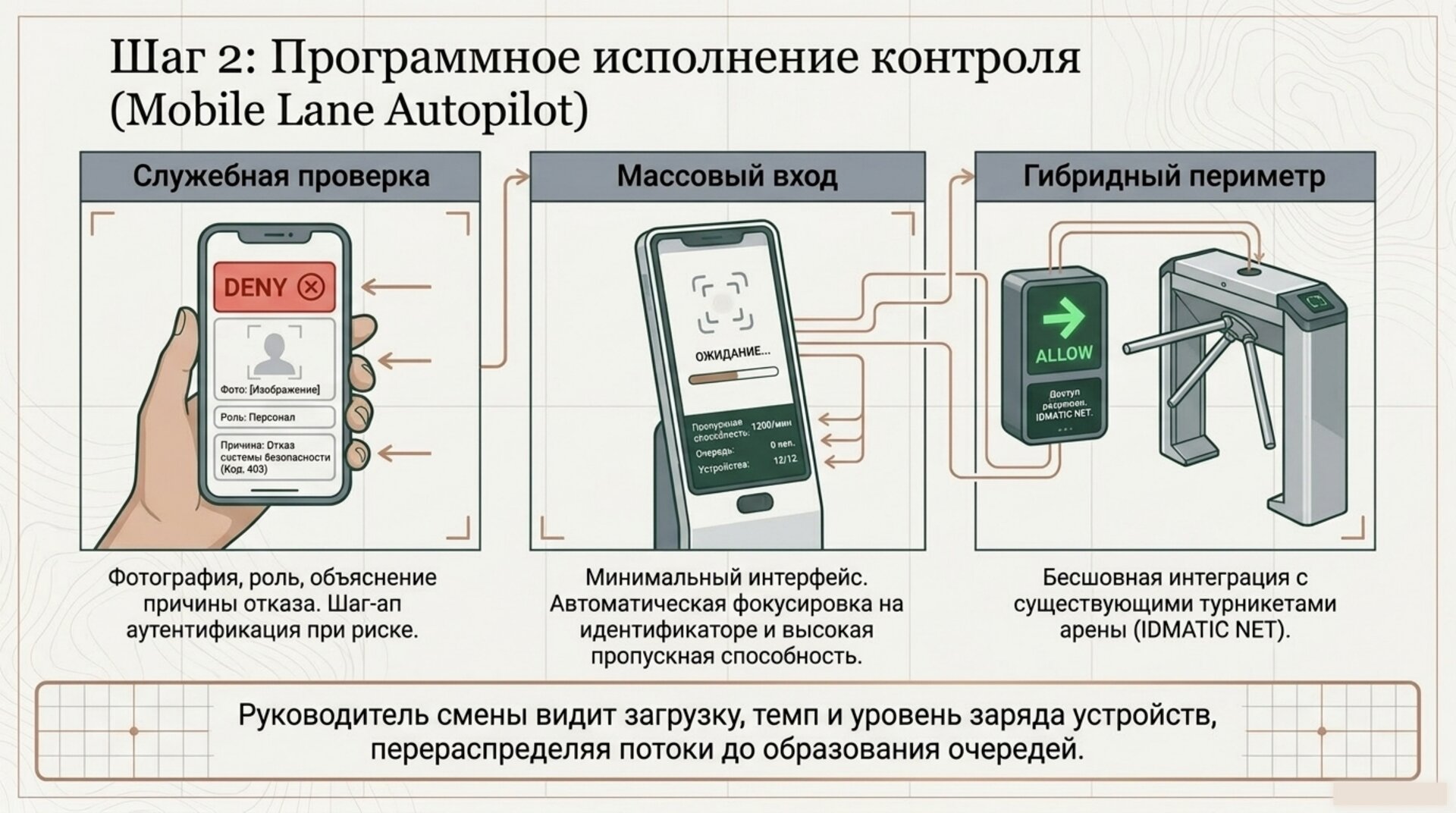
02 · Mobile Lane Autopilot

A mobile checkpoint adapts its lane behaviour to current load automatically.

The operator sets the zone rules once. The checkpoint opens or closes lanes, shows prompts and tightens or relaxes checks based on queue, time and visitor role.

Step 2: software-driven control — Mobile Lane Autopilot
03 · Situational control

Situational control

Real-time event control.

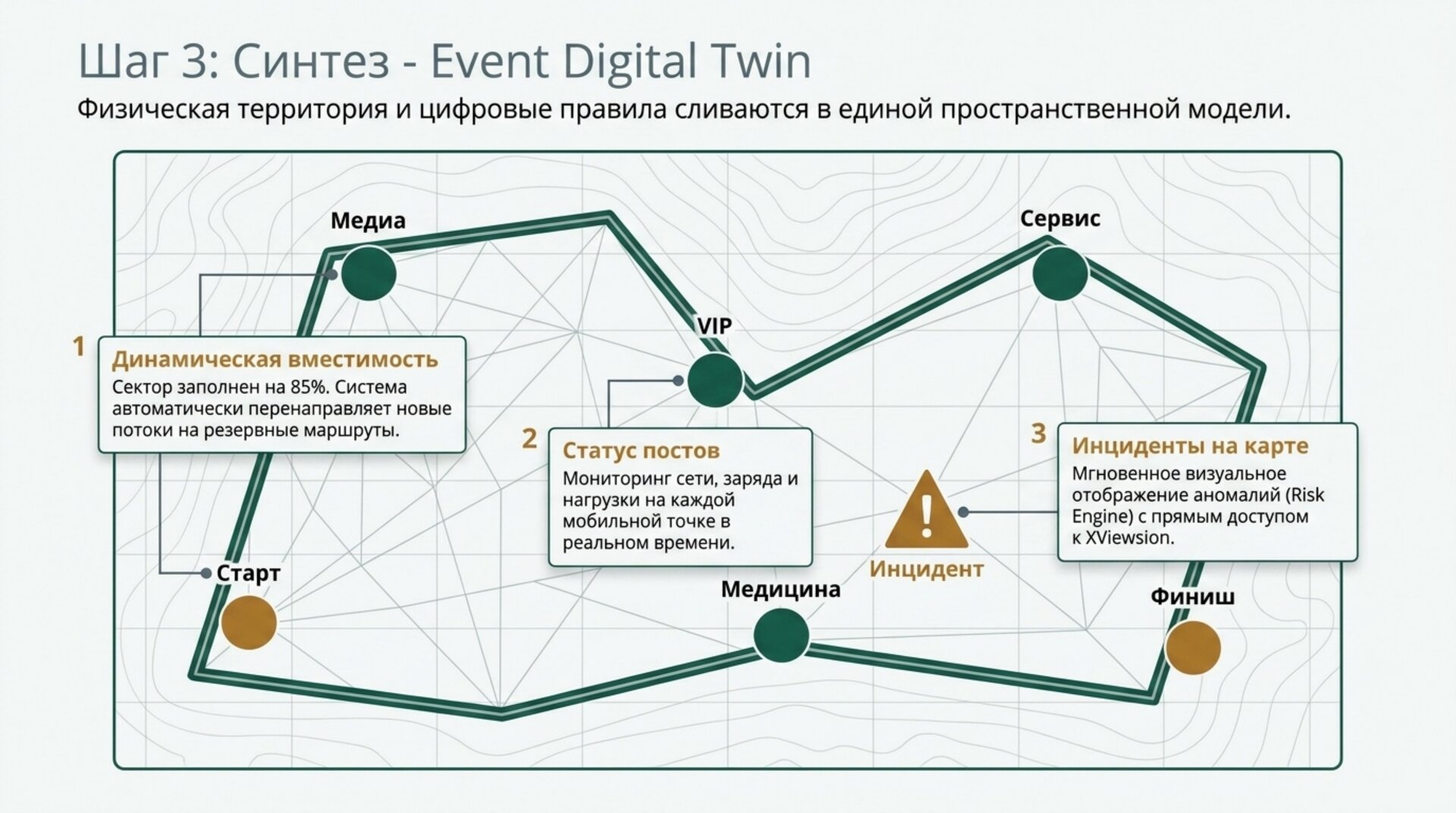
06 · Event Digital Twin

A digital model of the event: zones, routes, posts, roles and rules in one representation.

The twin helps plan a configuration, rehearse shifts and, during the event, see the actual perimeter state. Deviations are recorded to the journal.

07 · Dynamic Capacity & Access

Real-time zone capacity and access management by rules and dispatcher decisions.

Thresholds, windows, priorities, temporary exceptions and moving a zone into protected mode. Changes propagate to field posts and update the twin.

08 · Workforce & Safety Management

Staff registry, briefings, shifts, patrols, incidents and feedback from field posts.

The dispatcher sees people across zones and posts, assigns tasks, records and escalates incidents, and keeps the shift timeline.

Step 3: synthesis — Event Digital Twin
04 · Evidence

Evidence

What remains after the event.

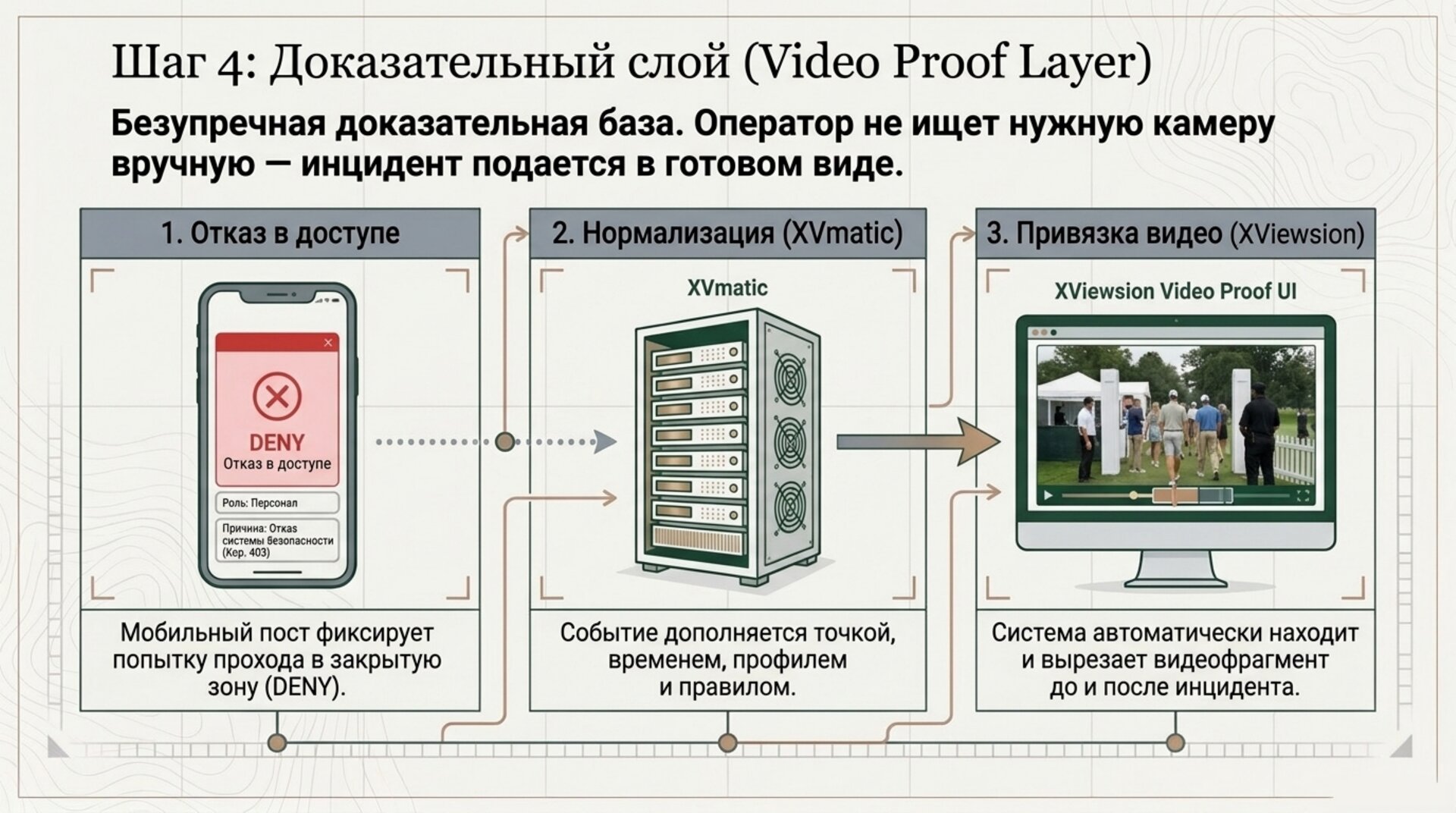
09 · Sports Fraud & Risk Engine

Analytics of pass reuse, pass-through anomalies and role substitution attempts.

Rules and models surface suspicious events. Each trigger carries an explanation, a journal link and a video reference where available.

10 · Partner Integration & White Label

Partner integrations and a white-label mode for event operators.

APIs, webhooks, SSO, import from ticketing, registration, HR and security systems. A partner can ship under its own brand and domain.

Step 4: evidence layer — XVmatic and XViewsion